



As we witness the rapid growth of connected devices, projected to exceed 50 billion by 2025, the insurance industry is on the cusp of a significant transformation.
We’re leveraging the power of IoT in insurance to revolutionize traditional business models and create new opportunities for growth.
By harnessing real-time data from various sources, we’re enabling insurers to develop more accurate risk assessment models and offer personalized customer experiences. According to a report, insurers who have adopted Internet of Things initiatives can minimize claiming process costs by up to 30%.
Key Takeaways
- The growing network of connected devices is creating new opportunities for insurers.
- IoT technology enables real-time data collection and analysis.
- Insurers can develop more accurate risk assessment models using IoT data.
- The global IoT insurance market is projected to grow significantly by 2032.
- We’re shifting from a reactive to a proactive approach in insurance using IoT.
Understanding the IoT Revolution in Insurance
The insurance industry is on the cusp of a revolution, driven by the Internet of Things (IoT). This technological advancement is transforming the way insurers operate, making the industry more proactive and customer-centric.

What is IoT and Why It Matters to Insurers
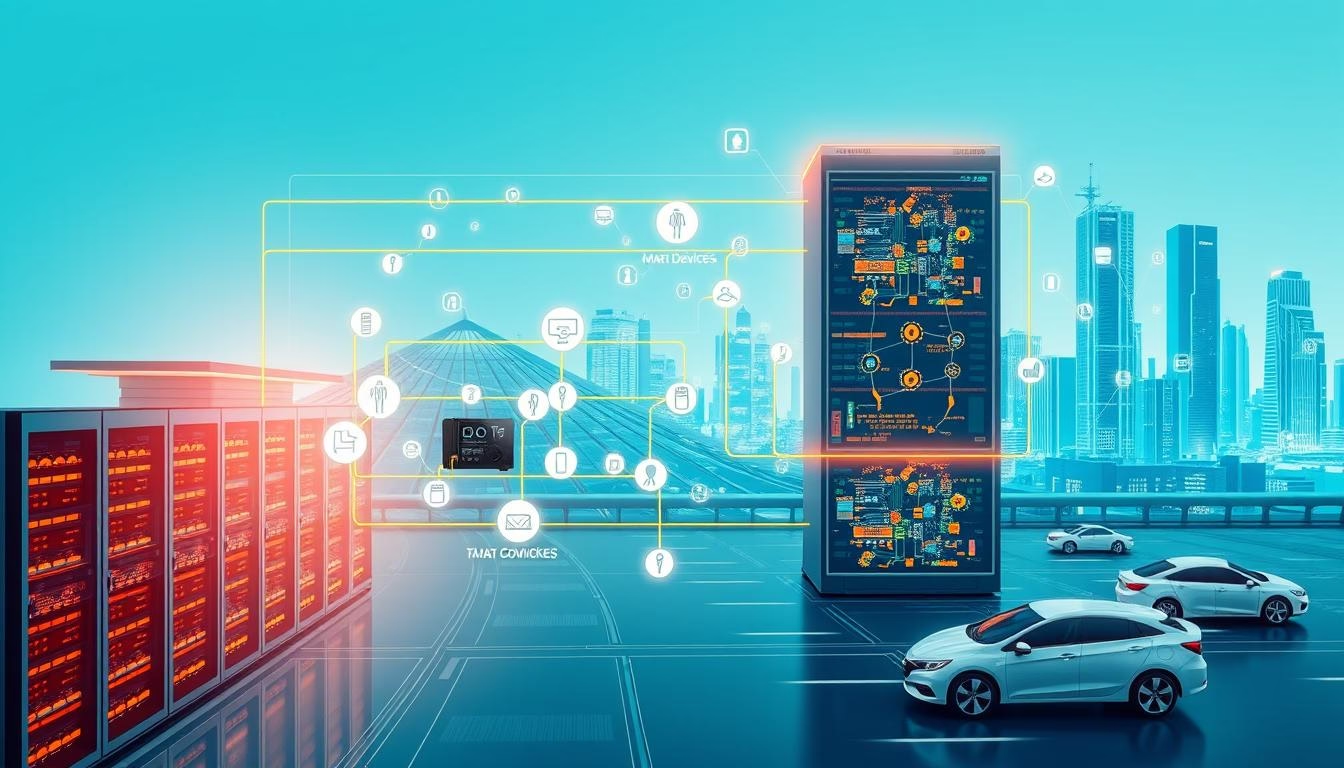
The Internet of Things (IoT) refers to the network of physical devices, vehicles, home appliances, and other items embedded with sensors, software, and connectivity, allowing them to collect and exchange data.
For insurers, IoT matters because it enables more accurate risk assessment and more frequent customer interactions. By leveraging data from connected devices, insurers can shift from a reactive claims processing model to a proactive approach focused on prevention and ongoing customer engagement.
The Growing Market for Connected Insurance Products
The market for insurance products that incorporate IoT technology is growing rapidly across various segments, including auto, home, health, and commercial lines. Insurers are using IoT data to develop new business models and revenue streams beyond traditional insurance coverage.
For instance, telematics in auto insurance and smart home devices are becoming increasingly popular, allowing insurers to offer more personalized insurance products and services tailored to individual customer needs and behaviors.
As the insurance industry continues to embrace IoT, we can expect to see more innovative applications of this technology, leading to enhanced customer experiences and operational efficiencies.
IoT Applications Across Insurance Sectors

As IoT continues to evolve, its applications in the insurance industry are becoming increasingly diverse, touching on property, casualty, life, health, and commercial lines.
Property and Casualty: Smart Homes and Telematics
In the property and casualty sector, IoT is advancing through smart home devices and vehicle telematics. Devices like moisture sensors and security cameras help homeowners prevent losses and provide insurers with data for risk assessment.
Smart home tech detects issues early, reducing claims. Telematics revolutionizes insurance by monitoring driving behaviors and enabling usage-based models.
This shift enhances safety and leads to accurate pricing and reduced risk. For insights on telematics in auto insurance, visit this link.
Telematics in vehicles monitor driving behavior and enable usage-based models, potentially reducing accidents by up to 80% in commercial fleets.
Life and Health: Wearables and Remote Monitoring

In life and health insurance, wearables and remote monitoring transform insurer interactions with policyholders. Wearable tech tracks activity, sleep, and vital signs, enabling personalized policies and health incentives.
For instance, insurers can offer discounts to those meeting health metrics. To learn more about wearables in health insurance, visit this link.
Remote monitoring helps seniors live independently while providing data for long-term care insurance. In commercial lines, IoT devices help businesses prevent losses through early detection of issues like leaks or breaches, reducing claims.
Leveraging IoT, insurers can offer value-added services like risk prevention advice.
Key Benefits of IoT in Insurance
The integration of IoT technology is revolutionizing the insurance industry by providing numerous benefits. As insurers adopt IoT solutions, they can significantly enhance their operational efficiency and customer interactions.
Enhanced Risk Assessment and Pricing
IoT provides insurers with richer, more detailed information for risk assessment, allowing for more accurate pricing from the start and continuous monitoring over time.
According to a report by McKinsey, digital ecosystems enabled by IoT can significantly enhance the insurance value chain. With real-time data from connected devices, insurers can better understand their customers’ behaviors and adjust their pricing models accordingly.

Proactive Loss Prevention
Real-time data from IoT devices enables insurers to identify potential risks before they result in claims, shifting from a reactive to a proactive approach focused on prevention.
For instance, telematics in vehicles can alert insurers to risky driving behaviors, allowing for early intervention. This proactive approach not only reduces claims frequency and severity but also enhances customer safety.
Improved Customer Engagement and Personalization
IoT enables more frequent and meaningful interactions with customers beyond traditional touchpoints. Data-driven insights allow insurers to offer personalized recommendations and services that add value beyond financial protection.
As noted in a study on AI in car insurance by AVtalkz, such personalized services can significantly enhance customer satisfaction and loyalty. By leveraging IoT, insurers can make insurance more tangible and relevant in customers’ daily lives through ongoing interactions and value-added services.
By streamlining claims processing using IoT data, insurers can reduce friction and improve the customer experience during what is traditionally the most stressful interaction. This not only enhances customer satisfaction but also fosters loyalty.
Implementing IoT Solutions in Insurance Operations
As insurers look to stay competitive, implementing IoT solutions has become a strategic imperative. To succeed, insurers must identify specific application areas that align with their business objectives and customer needs.
This involves understanding the potential of IoT to transform various aspects of insurance operations, from risk assessment to customer engagement.
Selecting the Right IoT Partners and Technologies
Selecting the right IoT partners is crucial for successful collaboration. Insurers should look for partners with relevant experience, technical capabilities, and a compatible business model. Key criteria for evaluating potential partners include their technical expertise, market presence, data security practices, and willingness to establish interoperable systems.
For instance, insurers can explore IoT use cases in the insurance to understand how different technologies can be applied. By choosing the right partners, insurers can leverage IoT technology to enhance their insurance products and services.
Developing Data-Driven Insurance Products
Developing data-driven insurance products is a key aspect of IoT implementation. Insurers can use IoT insights to create personalized products that meet customer needs while maintaining profitability and regulatory compliance.
This involves analyzing data from various IoT devices and sensors to better understand customer behavior and risk profiles.
For example, the integration of IoT data can help insurers offer more accurate pricing models and improve customer engagement. By leveraging IoT data, insurers can also explore new business models and revenue streams, enhancing their competitive edge in the market.
Creating Scalable IoT Infrastructure
Creating a scalable IoT infrastructure is essential for supporting IoT initiatives. This includes investing in data storage and processing capabilities that can handle the vast amounts of data generated by IoT devices.
Insurers must also ensure that their infrastructure can integrate with existing systems and adapt to evolving technologies.
By developing a scalable infrastructure, insurers can position themselves for long-term success in the IoT landscape. This involves not only implementing the right technology but also fostering a culture of innovation and continuous improvement within their organizations.
Overcoming Challenges in IoT Insurance Integration
As insurers continue to adopt IoT technologies, they face several challenges that need to be addressed to fully leverage the benefits of connected insurance products.
The integration of IoT in insurance is a complex process that involves not just technological upgrades but also changes in business processes and customer interactions.

Addressing Data Security and Privacy Concerns
One of the critical challenges insurers face is data security and privacy. IoT devices collect vast amounts of sensitive customer information, which must be protected against cyber threats.
Insurers must implement robust data protection measures, including encryption and secure data storage practices, to safeguard customer data.
Transparency is also key; insurers should clearly communicate to their customers how IoT data will be used and protected. This transparency helps build trust and ensures compliance with evolving privacy regulations.
Navigating Regulatory Compliance
Insurers must navigate a complex regulatory landscape when implementing IoT solutions. This involves balancing innovation with consumer protection and adhering to privacy regulations that vary by jurisdiction. Regulatory compliance is crucial to avoid legal and reputational risks.
Insurers should engage with regulatory bodies and industry associations to stay informed about the latest regulatory requirements and best practices for IoT insurance products.
Managing Legacy System Integration
Many insurers face the challenge of integrating IoT data and capabilities with legacy systems that may be decades old.
This requires a strategic approach to modernizing infrastructure without disrupting core operations. Insurers can adopt a phased integration approach, starting with non-core systems and gradually moving to critical systems.
By addressing these challenges, insurers can successfully integrate IoT into their operations, enhancing their ability to assess risks, prevent losses, and improve customer engagement.
Effective IoT integration requires a comprehensive risk management framework that addresses technical, operational, regulatory, and reputational risks.
Conclusion: The Future of Connected Insurance
IoT is poised to redefine the insurance sector, offering unprecedented opportunities for growth and innovation. As we embrace this technology, we’re not just improving existing processes; we’re reimagining the industry’s future.
The integration of IoT in insurance is having a significant impact on both insurers and their customers. By leveraging connected devices, insurers can enhance risk assessment, improve customer engagement, and develop more personalized insurance products.
Emerging trends such as advances in sensor technology and artificial intelligence will continue to shape the industry. To stay ahead, insurers must adopt a long-term perspective on IoT investments and develop strategic partnerships to access new expertise.
By doing so, they can unlock the full potential of IoT and create new business models that drive operational efficiency and profitability.
In conclusion, the future of connected insurance is bright, with IoT set to revolutionize the way insurers operate and interact with customers. By embracing this technology and its vast potential, the insurance industry can look forward to a more innovative and customer-centric future.