



As wildfires continue to ravage the United States, many homeowners are left wondering if their homes are at risk of becoming uninsurable. The Congressional Research Service reports that there were 68,988 wildfires in 2022, with an average of 61,410 occurring annually from 2013-2022.
With climate change exacerbating the situation, the World Resources Institute notes that the earth continues to warm, increasing wildfire activity in forest areas and impacting homeowners insurance policies for homeowners. The rising risk wildfire is forcing insurance carriers to reassess their premiums and coverage options in high-risk areas, leaving many homeowners to consider the value of their wildfire insurance policies over time.
We’re seeing a growing crisis in homeowners insurance coverage for homes in high-risk areas. As insurance carriers reassess their policies and premium structures, many homeowners may find themselves facing significant loss or unaffordable insurance premiums. Under new regulations, insurance companies must provide a “wildfire risk score” for homes or businesses, helping homeowners understand their risk and take steps to mitigate it over time.
Key Takeaways
- Understanding your home’s wildfire risk is crucial for maintaining insurability.
- Climate change is increasing wildfire activity across the United States.
- Insurance companies are pulling out of high-risk areas, leaving homeowners vulnerable.
- Standard homeowners insurance policies typically cover wildfire damage.
- Alternative insurance options may be available when traditional coverage is denied.
The Growing Wildfire Crisis in America
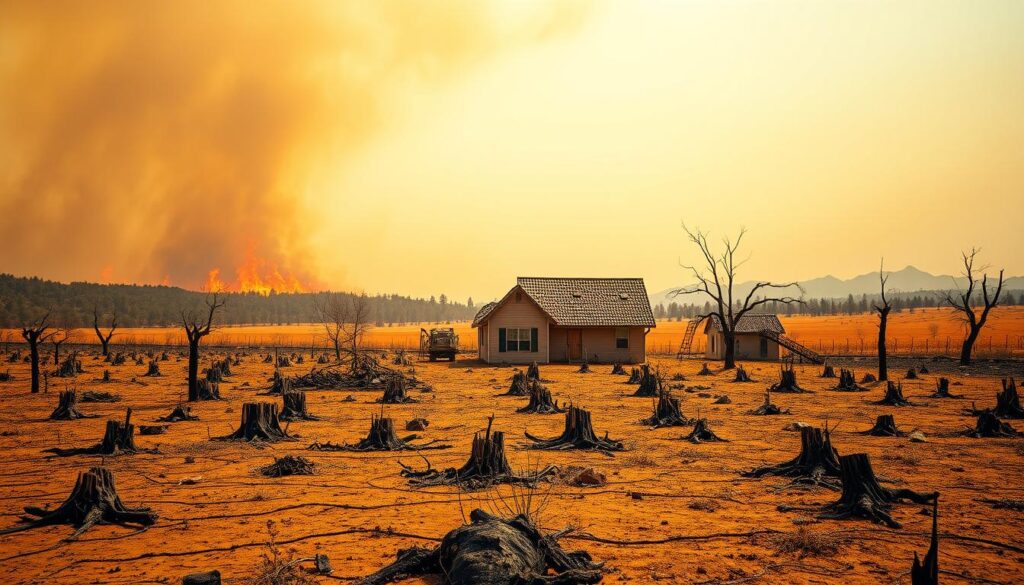
America’s wildfire crisis is escalating, with far-reaching consequences for both the environment and homeowners. The increasing frequency and severity of wildfires have raised concerns about the associated risks and the ability of insurance companies to cover the resultant damages, particularly regarding homeowners insurance policies and the potential loss of coverage in high-risk areas over time.
Recent Wildfire Statistics and Trends
Recent years have seen a significant surge in wildfire incidents across the United States. In case of these wildfires, the data reveals a disturbing trend: wildfires are not only becoming more frequent but also more destructive.
| Year | Number of Wildfires | Acres Burned (millions) |
|---|---|---|
| 2018 | 8,527 | 1.8 |
| 2019 | 10,136 | 4.3 |
| 2020 | 10,268 | 10.3 |
As shown in the table, there’s a clear upward trend in both the number of wildfires and the area affected by them. This escalation is attributed to a combination of factors, including climate change and historical forest management practices that influence homeowners insurance policies and premiums.
Climate Change and Forest Management Impacts
Climate change is creating hotter, drier conditions that extend fire seasons and increase wildfire risk across previously less vulnerable regions. Moreover, historical forest management practices, such as fire suppression and logging, have led to overstocked forests with excessive fuel loads.
“Overstocked forests are particularly vulnerable to more, bigger, and hotter wildfires. This condition is exacerbated by climate change, which further elevates the risk of catastrophic fires.”
The combination of these factors has created a perfect storm for catastrophic wildfires that threaten homes and communities at unprecedented levels. As we continue to navigate this crisis, understanding the interplay between climate change, forest management, and wildfire risk is crucial.
Understanding Wildfire Insurance Coverage
In the face of escalating wildfire threats, understanding your home insurance policy’s coverage is more important than ever. Many insurance companies don’t offer homeowners insurance in fire-prone areas or exclude coverage for wildfire damage, leaving homeowners vulnerable to increased premiums.
What Standard Homeowners Policies Cover
Standard homeowners insurance policies typically cover damage to the home and other structures on the property. However, the extent of this coverage can vary significantly when it comes to wildfires in high-risk areas. Most policies cover the cost of rebuilding or repairing the home if it’s damaged or destroyed by a wildfire in a forested region. Some policies may also cover additional living expenses if homeowners are forced to evacuate their homes due to wildfire damage, potentially impacting their premium costs.
As Insurance Information Institute notes, understanding the specifics of your home insurance policy is crucial. “Homeowners insurance policies can vary significantly in what they cover and how they respond to wildfire damage.”
Common Exclusions and Limitations
While standard homeowners policies may cover wildfire damage, there are often exclusions and limitations that homeowners should be aware of. Some policies may exclude coverage for homes that don’t meet specific wildfire mitigation requirements, such as having certain fire-resistant materials or maintaining a defensible space around the property.
- Policy endorsements or exclusions may specifically limit or eliminate wildfire coverage in high-risk areas.
- Some policies have separate, higher deductibles for wildfire claims.
- Coverage for landscaping, trees, and vegetation damaged by wildfires may be limited.
- Caps on coverage amounts might leave homeowners underinsured after a catastrophic wildfire.

As the risk of wildfires continues to grow in many forested areas, it’s essential for homeowners to review their home insurance policies carefully and understand any exclusions or limitations that may apply. By doing so, they can make informed decisions about their coverage and take steps to mitigate their wildfire risk.
The Shrinking Insurance Market in High-Risk Areas
In the face of rising wildfire risks, insurance providers are becoming increasingly cautious, leading to a shrinking market in high-risk areas. This trend is particularly concerning for homeowners in regions prone to wildfires, where the availability of insurance coverage is crucial for financial security.
Why Insurers Are Pulling Out
Insurance companies are pulling out of high-risk areas due to the increasing frequency and severity of wildfires in forested regions. The rising costs associated with claims and the unpredictability of wildfire events are making it challenging for insurers to maintain profitability in these areas. As a result, many insurance companies are either non-renewing policies or withdrawing from the market altogether.
California has been at the forefront of this issue, with a significant increase in non-renewals reported between 2018 and 2019. The state’s high wildfire risk, coupled with the growing number of destructive fires, has led to a 61% increase in non-renewals in moderate to high-risk ZIP codes.
States Most Affected by Non-Renewals
While California is the state most severely impacted, other western states are also facing similar challenges. Oregon, Washington, Colorado and Arizona are experiencing insurance market contractions due to wildfire risk. The non-renewals are not only affecting homeowners but also having a ripple effect on local economies and real estate markets.
The demographic and geographic patterns of non-renewals often disproportionately impact rural and urban interface communities. These areas are more vulnerable to wildfires, and the loss of insurance coverage can exacerbate the financial burden on residents.
Alternative Insurance Options When Traditional Coverage Fails
When traditional insurance coverage fails, homeowners in wildfire-prone areas must explore alternative options to protect their properties. The growing wildfire crisis has led to a shrinking insurance market in high-risk areas, leaving many homeowners with limited or no access to traditional insurance coverage.
State FAIR Plans: Last Resort Coverage
For homeowners who are unable to secure traditional insurance coverage, State FAIR (Fair Access to Insurance Requirements) Plans offer a last resort. These plans were established to provide basic property insurance to those who cannot obtain it through the standard market. While FAIR Plans are not a perfect solution and often come with higher premiums and limited coverage, they serve as a vital safety net for homeowners in high-risk areas.
State FAIR Plans are particularly important for homeowners who are struggling to find insurance due to the increasing wildfire risk. For instance, the necessity of securing reliable insurance coverage cannot be overstated, as it provides financial protection against unforeseen events.
Parametric Insurance Solutions
Parametric insurance is an innovative alternative that pays out based on predefined triggers rather than assessed damage. This type of insurance is particularly suitable for wildfire coverage, as the damage caused by wildfires tends to be binary – if the fire reaches a particular asset, it is likely to be completely lost.
Parametric wildfire insurance works by using measurements of fire intensity and location to determine payouts. A policy can be designed to pay a pre-agreed amount if the wildfire footprint reaches certain areas. This approach allows for faster payouts without the need for lengthy claims investigations, providing policyholders with quicker access to funds to recover from losses.
| Insurance Type | Payout Trigger | Advantages |
|---|---|---|
| Traditional Insurance | Assessed damage | Comprehensive coverage, flexible payout amounts |
| Parametric Insurance | Predefined triggers (e.g., wildfire intensity and location) | Faster payouts, ability to cover excluded losses |

Businesses in high-risk areas, such as wineries and ski resorts, are increasingly turning to parametric solutions to protect against business interruption losses. Parametric insurance can complement traditional coverage to create a more comprehensive protection strategy. However, it’s essential to be aware of the potential limitations, including basis risk – when the trigger doesn’t perfectly correlate with actual losses.
By understanding the available alternative insurance options, homeowners and businesses can make informed decisions to mitigate their wildfire risk and ensure they have adequate coverage in place.
Protecting Your Home from Wildfire Insurance Risk
With the increasing threat of wildfires in forested areas, it’s crucial for homeowners to take proactive measures to safeguard their homes and potentially lower their home insurance premiums. By implementing effective risk reduction strategies, homeowners can not only protect their properties but also contribute to the overall resilience of their communities and ensure their insurance policy covers wildfire risks.
Home Hardening Strategies
Home hardening involves making structural changes to your home to make it more resistant to wildfires. This can include using fire-resistant materials for roofing, siding, and windows. By hardening your home, you can significantly reduce the risk of damage from wildfires, which may lead to lower insurance premiums and increased protection for your property.
Creating Defensible Space
Creating defensible space around your home is another critical strategy for reducing wildfire risk. This involves clearing flammable vegetation, debris, and other combustible materials from around your property in the surrounding area. By doing so, you create a buffer zone that can help prevent wildfires from reaching your home and ensure that your insurance policy adequately covers potential damages. Research has shown that homes with well-maintained defensible spaces are less likely to be damaged or destroyed in wildfires, particularly in forested regions.

Community-Based Mitigation Efforts
Community-based mitigation efforts can have a significant impact on reducing wildfire risk. Initiatives such as the Firewise USA® program encourage neighborhoods to work together to implement wildfire safety standards. Additionally, practices like ecological forestry, including prescribed burns and forest thinning, have been shown to decrease total insurance premiums by 41% for homes in treated areas. By advocating for forest management projects on nearby public lands, communities can create larger defensible zones around populated areas, further reducing the risk of wildfires.
By combining home hardening strategies, creating defensible space, and participating in community-based mitigation efforts, homeowners can significantly reduce their wildfire risk and potentially lower their insurance costs. As the threat of wildfires continues to grow, taking proactive steps to protect your home and community is more important than ever.
Conclusion: Navigating the Future of Wildfire Insurance
As we navigate the complexities of wildfire insurance, it’s clear that the landscape is shifting rapidly. Homeowners in high-risk areas face significant challenges in securing adequate home insurance coverage due to the increasing threat of wildfires. The current state of wildfire insurance risk demands that homeowners be proactive about both their insurance coverage and physical home protection measures.
Emerging trends in wildfire insurance include the development of more parametric insurance products and community-based insurance programs. These innovations, along with improved forest management and home hardening strategies, offer hope for a more sustainable future for homeowners in wildfire-prone regions. For instance, regions like California are already seeing the impact of wildfire insurance crises, as discussed in the article on the California wildfire insurance crisis.
To stay ahead, homeowners must stay informed about their insurance options and regularly review their policies to ensure they have adequate insurance coverage. We encourage homeowners to advocate for policy changes at both the insurance company and governmental levels to address the growing wildfire insurance crisis. By taking proactive steps and staying informed, homeowners can better protect their homes and financial security in the face of increasing wildfire risk.
FAQ
What factors determine whether my home is at risk for a wildfire?
We consider several factors, including the location of your property, nearby forest conditions, and the presence of defensible space around your home.
Are there specific areas in the United States where wildfire risk is higher?
Yes, areas with dense forests and dry conditions, such as parts of California and Colorado, are generally considered higher-risk.
How can I reduce my home’s risk of damage from a fire?
We recommend implementing home hardening strategies, such as using fire-resistant materials and creating a safe perimeter around your property.
What is the difference between a standard homeowners policy and one that includes wildfire coverage?
Standard policies may not cover all losses related to wildfires, so it’s essential to review your policy and consider additional coverage if necessary.
Can I still get coverage if I live in a high-risk area?
Yes, there are alternative options, such as state FAIR plans and parametric insurance solutions, available for those who struggle to find traditional coverage.
How do insurers determine premiums for properties in high-risk areas?
Insurers assess various factors, including the property’s value, location, and risk mitigation measures, to determine premiums.
What role does climate change play in the increasing wildfire risk?
Climate change contributes to rising temperatures and changing weather patterns, which can increase the likelihood and severity of wildfires.
Are there any community-based initiatives that can help mitigate wildfire risk?
Yes, many communities are implementing mitigation efforts, such as prescribed burns and forest management, to reduce the risk of wildfires.