12 April 2026
- Crypto Payroll Systems: The Future of Employee Compensation?
- Proven Debt Management Strategies 2025: Slash Your Debt and Boost Your Credit Score with Proven Tips
- Guide to buying a home in 2025: How Young Adults Can Move from Renter to Homeowner
- Plan Your Dream Retirement: 2025 Guide to Digital Retirement Planning

News












Can you align your investments with your personal values without sacrificing returns? As we move into 2025, ethical investing has evolved from a niche strategy to a mainstream approach, with more diverse options available than ever before, including various funds and mutual funds.
We’re seeing a significant shift in how people choose to invest their money, with a growing interest in impact investing and socially responsible investing. This trend is driven by a desire to make a positive impact on the environment and society, while still aiming for healthy returns on investments. Investors are increasingly considering how their choices reflect their values and the implications for future generations.
In this year, as more firms embrace responsible investing, the demand for ethical options is expected to grow. This means that individuals can align their investment strategies with their gender and personal beliefs, ensuring that their financial decisions contribute positively to the world.
As research shows, ethical investments can perform comparably to or even outperform traditional investments. In this guide, we’ll explore how to build an investment portfolio that aligns with your values and contributes to positive outcomes, ensuring that your funds and money are utilized effectively over time for the benefit of both investors and employees.
Key Takeaways
- Ethical investing is becoming increasingly mainstream.
- Diverse options are now available for ethical investors.
- It’s possible to invest ethically without sacrificing returns.
- Aligning investments with personal values is a growing trend.
- Practical steps will be provided to navigate the ethical investing landscape.
Understanding Ethical Investing in 2025
Ethical investing in 2025 is more sophisticated than ever, with evolving standards and metrics. As investors manage their funds and money, we’re seeing a significant shift towards more comprehensive and nuanced approaches to ethical investments this year.

What Makes an Investment “Ethical”
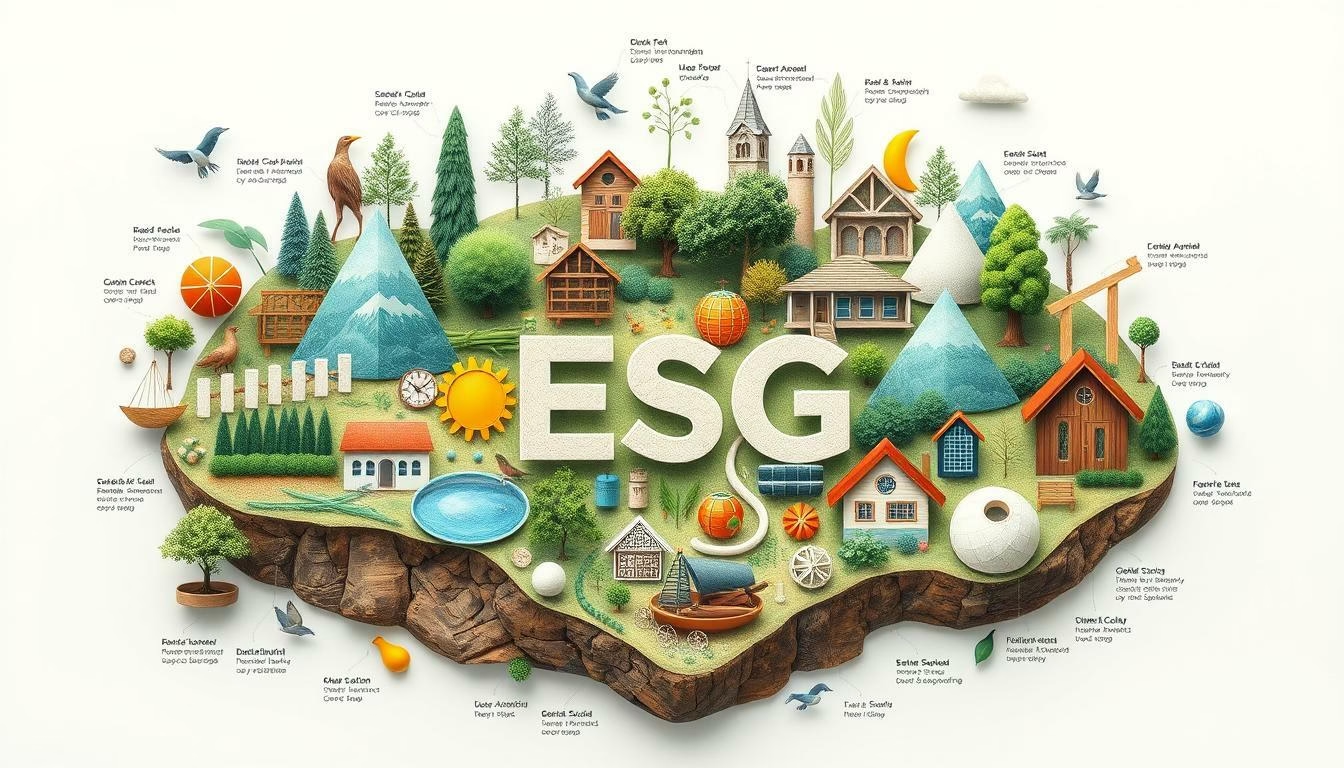
At its core, ethical investing involves considering Environmental, Social, and Governance (ESG) factors. The “E” encompasses a company’s energy use, waste management, and treatment of animals. The “S” deals with issues like diversity, charitable donations, and worker conditions.
The “G” focuses on avoiding conflicts of interest, transparent accounting, and ethical business practices in the investment place. These considerations are crucial for investors looking to allocate their funds responsibly and ensure that their business practices align with their values.
The Evolution of ESG Criteria
The ESG criteria have evolved significantly. Initially, it was about basic screening; now, it’s a comprehensive analysis of company practices and impacts. For instance, the environmental component now includes not just carbon footprints but also biodiversity impacts, water usage, and circular economy contributions.
Social considerations have expanded to include supply chain ethics and community engagement, which are crucial for investors looking to allocate their funds responsibly and align their investment account with their values.
Ethical Investing vs. SRI vs. Impact Investing
Terms like ethical investing, Socially Responsible Investing (SRI), and impact investing are often used interchangeably but have distinct meanings. Ethical investing focuses on avoiding harmful investments, while SRI involves actively choosing investments that are socially responsible.
Impact investing takes it a step further by seeking investments that generate both financial returns and positive social or environmental impact, which is crucial for every investor looking to diversify their fund.
Understanding these distinctions is crucial for investors to align their investments with their values and financial goals. As we work towards 2025, the importance of ethical investing continues to grow, offering a range of opportunities for investors to index their portfolios and make a positive impact.
Defining Your Ethical Investment Values
Ethical investing in 2025 starts with understanding your personal values and priorities. As you form your investment strategy, it’s important to account for your ethical considerations. As ethical investing continues to evolve, it’s crucial to clarify what matters most to you based on the data available.
Identifying Your Personal Ethics and Priorities
To invest ethically, you need to identify your core ethics and priorities. This involves reflecting on the things you care about and the impact you want your investments to have.
We recommend taking practical exercises to account for your ethical concerns, from climate change and renewable energy to social justice and corporate governance practices based on available data.
Environmental Considerations for 2025

Environmental considerations have evolved significantly by 2025. Companies are now evaluated on their climate commitments, biodiversity impacts, and circular economy initiatives. It’s essential to assess whether a company’s environmental claims represent genuine progress or merely “greenwashing.” To account for these factors is a crucial thing for investors aiming to make informed decisions.
| Environmental Factor | Description | Importance Level |
|---|---|---|
| Climate Commitments | Company’s efforts to reduce carbon footprint | High |
| Biodiversity Impacts | Effect on ecosystems and wildlife | Medium |
| Circular Economy Initiatives | Efforts to reduce waste and promote recycling | High |
Social and Governance Factors to Evaluate
Social factors include a company’s approach to human rights, diversity and inclusion practices, and community engagement. Governance evaluation involves examining board diversity, executive compensation structures, and corporate transparency. These factors are crucial in determining a company’s overall ethical standing.
Balancing Ethics and Financial Goals
Balancing your ethical priorities with financial goals is key to successful ethical investing. Research shows that ethical investments can perform comparably to or even outperform traditional investments over the long term. By making informed choices, you can achieve your financial goals while making a positive impact on the world.
Building Your Ethical Investment Portfolio
With the ethical investment landscape expanding rapidly in 2025, investors have more opportunities than ever to create a portfolio that aligns with their values. As we explore the various options available, it’s essential to consider both the financial and ethical implications of our investment choices.
Ethical Investment Options in 2025
The year 2025 has brought a wide range of ethical investment options to the table. Investors can now choose from specialized ESG mutual funds and ETFs that focus on specific issues or broader ESG criteria.
When selecting a fund, it’s crucial to examine the investment fee, aiming for a fee of no higher than 0.5%. Learn more about ethical investing.
DIY Approach: Researching and Selecting Ethical Investments
For those who prefer a hands-on approach, researching and selecting ethical investments can be a rewarding process. Utilize ESG ratings and sustainability reports to evaluate potential investments, but be aware of their limitations. Various screening tools are available to help identify companies that meet your ethical standards.
Using Robo-Advisors for Ethical Investing
Robo-advisors have evolved significantly, offering sophisticated ethical investing options. When evaluating a robo-advisor, consider their ethical investing methodology, including whether they use exclusionary screening or more comprehensive positive impact approaches. This ensures alignment with your personal ethics and financial goals.

Diversification Strategies for Ethical Portfolios
Diversification remains crucial for ethical portfolios, just as it is for traditional investments. To achieve proper balance, consider spreading your investments across different asset classes while maintaining your ethical standards.
This might involve exploring fixed-income options and international investments that meet your ethical criteria. Additionally, utilizing resources like socially responsible investing guides can provide further insights into creating a well-rounded ethical portfolio.
Measuring Success and Adjusting Your Ethical Portfolio
Ethical investing is about informed decisions that drive real impact. To measure the success of your ethical investments, look beyond traditional metrics. In 2025, advanced impact measurement tools allow investors to quantify environmental and social outcomes of their ethical investments precisely.
To evaluate your ethical portfolio, benchmark it against appropriate indices. This will help you track your long-term financial goals. Research on ethical investment performance evolves, comparing returns of socially responsible investments to conventional alternatives.
Regular review and adjustment are essential. Periodically reassess your ethical priorities and your investments’ alignment. As companies evolve, staying informed and making adjustments is key. You can engage with companies as a shareholder to encourage better practices – an important aspect of ethical investing in 2025.
By adopting a comprehensive approach to measuring success and adjusting your ethical portfolio, you ensure that your investments align with your values and financial goals. Whether through retirement accounts or other vehicles, tracking the impact of your socially responsible investments is crucial for long-term success.
Conclusion
To conclude it is vital to recognize that ethical investing is not just a trend but a commitment to making a positive impact through our financial choices. This commitment goes beyond merely selecting investments; it involves actively engaging with companies to encourage practices that are socially responsible and environmentally sustainable.
By remaining informed and engaged with the companies we invest in, we can drive change and promote sustainability. Furthermore, as investors, we have the power to influence corporate behavior by demanding transparency and accountability in their operations.
As we navigate the evolving landscape of investments, let us prioritize aligning our portfolios with our values, ensuring that our financial decisions contribute to a better future for all. By doing so, we not only enhance our potential for financial returns but also support initiatives that foster a healthier planet and a more equitable society.
FAQ
What are the key factors to consider when evaluating a company’s ESG (Environmental, Social, and Governance) criteria?
How do I know if a mutual fund or ETF is truly socially responsible?
Can I still achieve competitive returns with an ethical investment portfolio?
How often should I review and adjust my ethical investment portfolio?
What role do robo-advisors play in ethical investing, and how do they compare to traditional financial advisors?
How do I ensure that my investments are having a positive impact on the issues I care about?
Are there any fees associated with ethical investing that I should be aware of?
Trending News